Every air conditioner makes noise. A low hum from the outdoor unit, a soft whoosh at the vents, a gentle click as the thermostat calls for cooling — those are the sounds of a system doing its job, and you stop hearing them after a week in a new house.
What you notice is the new sound. The screech that was not there last summer. The bang when the unit kicks on. The buzzing from outside at two in the morning. Those sounds are diagnostic information, and learning to read them tells you whether you are looking at a cheap same-day fix, a repair that can wait, or a reason to shut the system off before it damages itself further.
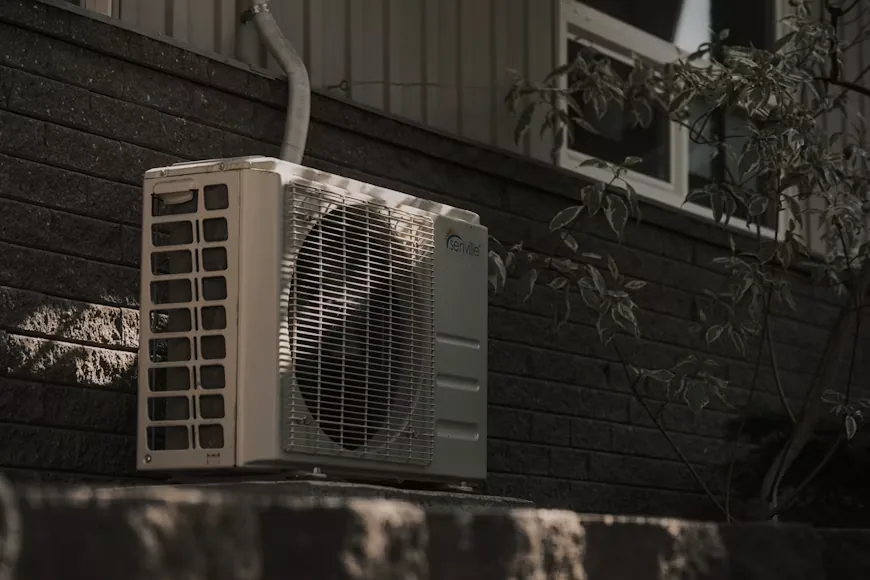
What Does It Mean When My AC Makes a Loud Noise?
Each sound points to a different fault. Buzzing usually means an electrical issue such as a failing capacitor, screeching points to a motor bearing, banging suggests a loose or broken compressor part, and hissing indicates a refrigerant leak. Grinding, banging, and burning smells mean shut the system off and call.
Sound-by-Sound: What Your AC Is Telling You
Use this to narrow it down quickly, then read the detail below for whichever sound matches.
| Sound | Most likely cause | Urgency |
|---|---|---|
| Buzzing or humming, fan not spinning | Failed capacitor | Call today |
| Rapid clicking on startup | Failing relay or control board | Call soon |
| Screeching or squealing | Motor bearing or belt | Call soon |
| Banging or clanking | Loose or broken compressor part | Shut off, call now |
| Grinding | Motor bearings failing | Shut off, call now |
| Hissing | Refrigerant leak | Call soon |
| Bubbling or gurgling | Refrigerant or drain line issue | Call soon |
| Rattling | Loose panel, debris, or ageing parts | Check, then call |
Buzzing or Humming
Buzzing is electrical, and in Fort Worth it is the sound of summer. The classic version: you walk outside and the unit is humming loudly but the fan on top is not turning. That is almost always a failed capacitor — the small cylinder that gives the motor the jolt it needs to start.
Texas heat destroys capacitors faster than almost anywhere. They are also one of the cheapest repairs on the list and usually fixed in a single visit, which makes this one of the better outcomes when your AC quits in July.
A quieter, more constant buzz with everything running normally can be loose wiring or a contactor beginning to fail. Neither is an emergency this minute, but both are electrical and both get worse.
Some online videos suggest pushing the fan blade with a stick to start it. That confirms a capacitor fault, but it also puts your hand near live electrical components and a blade that will spin without warning. It is not worth it.
Clicking
A single click when the system starts or stops is normal — that is a relay doing exactly what it should.
Repeated, rapid clicking is not. It usually means the system is trying to start and failing, over and over. The cause might be a failing relay, a control board problem, or a capacitor that has weakened enough to prevent startup entirely. Each attempt draws a heavy inrush of current, so this is worth addressing before the repeated strain damages the compressor.
Screeching or Squealing
A high metallic screech is almost always a bearing. Motors in an air conditioner spin at high speed for thousands of hours across a Texas cooling season, and when the bearings wear, they announce it.
The sound usually appears at startup first, then becomes constant. On older equipment it can also be a slipping belt on a belt-driven blower, though most modern residential systems are direct drive. Either way, a screech that is getting louder week by week is a motor heading toward failure — and a motor that seizes in August is a considerably worse day than one replaced in June.
Hearing something new from your system? Describe the sound on the phone and you will usually get a straight answer about how urgent it is.
📞 Call Now — (817) 710-3410Banging, Clanking, or Grinding
These are the sounds that justify shutting the system off at the breaker.
Banging or clanking generally means something inside the compressor has come loose, or a fan blade is striking its housing. Grinding means bearings have failed and metal is contacting metal. In both cases, every additional minute of running turns a repair into a replacement — loose components inside a compressor destroy the compressor, and a fan striking its housing can shear the blade.
If you hear either, switch the system off at the thermostat and then at the outdoor breaker, and call. This is the one category where waiting genuinely costs you money.
Hissing, Bubbling, or Gurgling
Hissing points to refrigerant escaping under pressure. You may also notice the system cooling weakly, ice forming on the copper lines, or the unit running constantly without ever satisfying the thermostat.
Refrigerant is not consumed in normal operation, so if the charge is low there is a leak. A company that simply tops it off without finding that leak has sold you a few weeks, not a repair. Bubbling or gurgling can be the same problem, or it can be a partially blocked condensate drain — which matters, because a fully blocked drain in a North Texas attic is how ceilings get ruined.
Our AC repair page covers how each of these is diagnosed properly, and if the system is also failing to cool, the troubleshooting checklist walks through the safe checks to make first.
Rattling
Rattling is the most forgiving sound on this list, and often the easiest to solve. Common causes, roughly in order:
- Debris in the outdoor unit. Twigs, leaves, and the occasional stray toy. Power off at the breaker, lift the top grille if accessible, and clear it.
- A loose access panel. Screws work loose from vibration over a couple of seasons.
- Loose ductwork. A duct section rattling against a joist inside the wall or attic.
- An ageing unit generally. Bolts and mounts loosen with years of vibration in extreme heat.
If a rattle appears suddenly and is accompanied by any change in cooling performance, treat it as more urgent — that combination suggests something has come loose rather than simply worn.
Noises From Inside the House
Not every sound comes from the unit outside. Indoor noises have their own vocabulary.
A whistling at the vents usually means restricted airflow — often a filter overdue for changing, sometimes a closed or blocked return. A booming or popping from the ductwork when the system starts is metal expanding as cold air hits it, which is normal in moderation but can indicate undersized ducts if it is loud. And a sound like water trickling where no water should be is worth investigating quickly, because in most Fort Worth homes the air handler sits in the attic directly above finished ceilings.
What These Repairs Typically Cost
| Fault behind the noise | Typical Fort Worth range |
|---|---|
| Capacitor (buzzing) | $150 – $350 |
| Contactor or relay (clicking) | $150 – $400 |
| Fan or blower motor (screeching) | $400 – $900 |
| Refrigerant leak repair (hissing) | $300 – $1,200 |
| Compressor replacement (banging) | $1,200 – $2,800 |
The pattern is worth noticing: the sounds that are easiest to ignore — a buzz, a click — are attached to the cheapest repairs. The expensive ones are the sounds you cannot ignore. Acting on the small noise is how you avoid meeting the large one. The full repair cost guide breaks these down further.
Which Sounds Mean Shut It Off Right Now
- Grinding metal — bearings have failed, damage is happening as it runs.
- Loud banging or clanking — something is loose inside the compressor.
- Any burning or electrical smell alongside a noise — shut off at the breaker and call immediately.
- A screech accompanied by smoke or a hot smell — a motor is seizing.
Everything else can generally wait for a scheduled appointment. If it is 2am, the house is comfortable, and the unit is rattling, you do not need an emergency call-out — you need one in the morning. Knowing that difference saves you an after-hours premium.
The Noise You Prevent
Most of these sounds are the second act. The capacitor was weakening for weeks before it started buzzing. The motor bearing was drying out before it screeched. A seasonal tune-up catches worn capacitors, tightens loose panels, and flags failing bearings while they are still quiet — which is the entire point of doing it before the season peaks rather than during it.
How to Describe the Sound So You Get the Right Answer
When you call, the quality of the diagnosis over the phone depends almost entirely on how well you describe what you are hearing. Four details do most of the work.
- Where is it coming from — the outdoor unit, the indoor air handler, or the vents themselves. This alone splits the possible causes roughly in half.
- When does it happen — only at startup, only at shutdown, or constantly while running. Startup noises point to electrical and motor issues; constant noises point to mechanical ones.
- Is the system still cooling — a noise with normal cooling is a different problem from a noise with warm air at the vents.
- How long has it been happening — a sound that has been getting worse for three weeks is a wearing part. One that appeared this morning is something that broke.
If you can safely do it, a short phone recording from a few feet away is genuinely useful. Technicians recognise these sounds instantly, and it often turns a guess into a confident answer before anyone is dispatched.
Why Fort Worth Systems Get Noisy Sooner
The same equipment installed in a mild climate stays quiet longer, and it is worth understanding why yours does not.
Run hours are the main reason. A Fort Worth air conditioner works from roughly April into October, and through July and August it may run most of the day. That is thousands more operating hours per year than the same unit would see further north, and every one of them is wear on bearings, capacitors, and mounting hardware.
Heat compounds it. Electrical components rated for normal conditions degrade faster when the cabinet they live in sits in direct Texas sun all afternoon. That is the single biggest reason capacitors fail here so much sooner than their rated life suggests.
Older housing stock adds its own version. Across the established parts of Fort Worth and the 1960s-to-1980s neighbourhoods in places like North Richland Hills, plenty of systems sit in cramped attics with limited clearance, where vibration transmits into the structure and a small mechanical noise becomes a sound you hear in the bedroom below.
Frequently Asked Questions
Why is my AC buzzing but not turning on?
Almost always a failed capacitor. The motor is receiving power but cannot start, so it hums instead of spinning. It is one of the cheapest AC repairs and usually fixed in a single visit.
Is it safe to run my AC if it is making noise?
Depends on the sound. Rattling or humming can usually wait a day or two. Grinding, banging, or any burning smell means shut it off at the breaker immediately.
Why does my AC bang when it starts up?
A loose compressor component or a fan blade striking its housing. Both worsen quickly with continued running, so switch the system off and have it inspected before restarting.
What is the hissing sound from my air conditioner?
Usually refrigerant escaping under pressure. You may also see ice on the lines or weak cooling. Refrigerant is not consumed normally, so low charge always means a leak needs finding.
Can a noisy AC unit be repaired, or does it need replacing?
Most noises trace to a single repairable part — capacitor, motor, contactor. Replacement only enters the conversation when the compressor itself has failed on an older system.
Hearing something you have not heard before? Call (817) 710-3410 and describe it — most sounds can be narrowed down over the phone.
Need this fixed today? Call for a straight answer and an upfront price — 24/7.
📞 Call (817) 710-3410admin
Writing about HVAC service, repairs, and costs for Fort Worth, TX homeowners.
Need HVAC Help in Fort Worth?
Tell us what your system is doing and we’ll connect you with a local professional — same-day where possible, with the price agreed in writing before any work starts.
- Same-day appointments available
- Upfront, written pricing
- 24/7 emergency line
Get Your Free Quote
We’ll get back to you as soon as possible. No spam, ever.
Ready to Get Comfortable Again?
Skip the form — the fastest way to get help is a phone call. Tell us what your system is doing and we’ll give you a straight answer and an upfront price.
(817) 710-3410