Commercial HVAC Services in Fort Worth, TX
When your HVAC goes down, your business does too. We keep Fort Worth storefronts, offices and shops open with fast response, upfront pricing, and work scheduled around your hours.
- Fully Insured
- 24/7 Emergency Service
- Workmanship Warranty
- Upfront Pricing
- Serving Tarrant County
Get Your Free Quote
We’ll get back to you as soon as possible. No spam, ever.
How Much Does Commercial HVAC Service Cost in Fort Worth?
Commercial HVAC service in Fort Worth typically starts around {{NEEDS INPUT}}, depending on system type, roof access, and unit count. Rooftop units and multi-zone systems cost more than a single split. We quote in writing before starting and work around your hours — serving 76102, 76109, and nearby ZIPs.
Prices vary by system, parts, and unit age. We confirm your exact price before any work begins.
When Commercial HVAC Goes Down, the Business Goes With It
A home without cooling is uncomfortable. A business without cooling is losing money by the hour. Customers walk out of a hot dining room, staff can’t work a 95° back office, and a rooftop unit that quits over a Fort Worth weekend can mean a Monday with the doors closed. Commercial HVAC is not a bigger version of home HVAC — it’s a different job, on a different clock, with the whole operation riding on how fast it gets fixed.
We run commercial HVAC service across Fort Worth and Tarrant County for the businesses that can’t afford a guessing game. Rooftop units, split systems, multi-zone setups — we diagnose the real fault, quote it in writing, and schedule the work around your hours instead of ours. No mystery invoices, no “we’ll top off the refrigerant and see,” no tech who has never opened the panel on a packaged unit.
Commercial Systems We Service
Most Fort Worth commercial buildings run one of a handful of setups. We work on all of them:
- Rooftop units (RTUs / packaged units) — the workhorse on top of most retail, restaurants and offices. Cooling, heating, and airflow in one cabinet. We handle repair, replacement, and scheduled service.
- Split & light-commercial systems — the smaller storefront and office setups with an indoor air handler and an outdoor condenser.
- Multi-zone & mini-split systems — for buildings that need different temperatures in different rooms without ripping in new ductwork.
- Make-up air & ventilation — the fresh-air and exhaust side that restaurants and shops live and die by.
RTU, Split, or VRF — Which System Does Your Building Run?
Most business owners inherit whatever the building came with, and the differences matter when something breaks or needs replacing. Here’s the plain-English version:
- Packaged rooftop units (RTUs) — the workhorse on most Fort Worth retail, restaurant, and office buildings. Everything (compressor, coils, blower, often heating) lives in one cabinet on the roof, which keeps noise and equipment out of your space and makes service straightforward. Downside: roof access is required, and a single failed unit takes out an entire zone.
- Split systems — an outdoor condenser paired with an indoor air handler, the same basic design as a home system but sized commercially. Common in smaller storefronts, suites, and converted buildings without roof capacity. Cheaper per unit and easier to replace one at a time.
- Variable Refrigerant Flow (VRF) — multiple indoor units running off one outdoor system, each controlled independently. Excellent where different rooms need different temperatures at the same time (offices with server rooms, medical suites, multi-tenant buildings) and very efficient at partial load. Higher up-front cost and needs a technician who genuinely knows the controls.
- Chillers and boilers — found in larger facilities, older institutional buildings, and industrial sites, moving heating or cooling through water loops rather than refrigerant alone. These need specialist attention and a very different maintenance rhythm.
- Building management systems (BMS) — the controls layer that schedules and monitors everything above. When a “system failure” turns out to be a scheduling or sensor fault in the BMS, the fix is often far cheaper than the equipment quote you were dreading.
If you’re not sure which you have, we’ll identify it on the first visit and tell you what it means for service cost, parts availability, and how long a replacement would realistically take.
The Commercial Breakdowns We Get Called For Most
Dead capacitors and contactors. The single most common summer call. Cheap parts, but when they fail the compressor won’t start and the unit blows warm. We stock the common ones so it’s usually a same-visit fix.
Low refrigerant / leaks. A system doesn’t “use up” refrigerant — if it’s low, it’s leaking. Anyone who just tops it off has sold you next month’s repeat call. We find the leak first, then talk about the recharge.
Clogged condensate drains. On a rooftop unit a backed-up drain either trips a safety and shuts you down, or finds your ceiling tiles instead. Cheap to clear, expensive to ignore.
Failed blower motors and belts. The air’s cold but nothing’s coming out of the vents. On packaged units this is often a motor, bearing, or belt — and it strands your whole floor when it goes.
Compressor failure. The expensive one. Sometimes it’s the compressor itself; often it’s a failed capacitor or a wiring fault that only looks like a dead compressor. We confirm which before anyone spends four figures.
Thermostat and control faults. On commercial controls a bad sensor or board can mimic a total system failure. Worth ruling out before you replace anything major.
Early mornings, late nights, or overnight — we schedule commercial jobs so we are never clearing your floor during business hours.
What Commercial Downtime Really Costs
A repair bill is the visible cost of a commercial HVAC failure. The invisible costs are usually bigger. A restaurant with a dead rooftop unit on a summer Friday loses a full service of covers — and risks spoiling refrigerated stock if the failure cascades. A retail floor at 88° empties out, and the customers who walked don’t come back that day. An office full of staff at 90° simply stops being productive. Once you add those up, the math on fast response and preventive care changes completely: paying a little to prevent downtime is almost always cheaper than paying a lot to recover from it. That’s the lens we bring to every commercial job — get you running fast, and keep you from ending up here again.
What Commercial HVAC Service Costs in Fort Worth
Commercial pricing depends on the system, roof access, and how many units are involved — so treat these as typical Fort Worth ranges, not a quote. You always get a written price before any work starts.
| Service | Typical Fort Worth range |
|---|---|
| Commercial diagnostic / service call | $89 – $189 |
| Capacitor or contactor replacement | $150 – $450 |
| Condensate drain clear / safety switch | $150 – $400 |
| Blower motor or belt | $350 – $1,200 |
| Refrigerant leak repair + recharge | $500 – $2,200 |
| Compressor replacement (per unit) | $1,800 – $4,500+ |
| Rooftop unit replacement (per unit) | Quoted on site |
| Preventive maintenance agreement (per unit / visit) | $120 – $300 |
If you run more than a couple of units, a maintenance agreement almost always costs less than one emergency shutdown. We’ll build the plan around your equipment and your open hours.
What Commercial Installation & Replacement Costs
Replacement is where commercial numbers get big and vague, so here are real budgeting ranges. As a rough industry guide, commercial HVAC runs $15–$30 per square foot for a full system, though your building’s condition and access swing that considerably.
| Building type | Typical full-system range |
|---|---|
| Small office (2,000–5,000 sq ft) | $15,000 – $30,000 |
| Retail store or restaurant | $20,000 – $40,000 |
| Medium office or public building | $40,000 – $100,000+ |
| Large warehouse or industrial facility | $100,000 – $400,000+ |
By equipment type, expect roughly:
| System | Typical installed cost |
|---|---|
| Packaged rooftop unit (RTU), per unit | $10,000 – $45,000 |
| Commercial split system | $7,000 – $40,000 |
| VRF system | $15,000 – $50,000+ |
| BMS / controls integration | $5,000 – $25,000 |
Three things move these numbers that nobody warns you about up front. Roof structural reinforcement may be required if a new RTU is heavier than the one it replaces. Electrical service upgrades are common in older buildings that can’t carry modern equipment. And code-driven ventilation or fire-safety work can be triggered by the replacement itself. Each of those typically adds $1,500–$5,000, sometimes more. We identify them during the survey and put them in the quote — rather than discovering them mid-project and handing you a change order.
Ask us for a written scope you can genuinely compare against other bids — equipment, tonnage, controls, permits, and any structural or electrical work listed separately. A cheaper number is often a smaller scope, and that difference tends to surface after the work has started. Financing and phased replacement schedules are available for larger projects.
Why Fort Worth Businesses Call Us
- We prioritize commercial downtime. A closed business is a real deadline, and we treat it like one.
- We work around your hours. Early, late, or overnight so we’re not clearing your floor during a lunch rush.
- Written, upfront pricing. You approve the number before the wrench comes out — no surprise invoice.
- We diagnose before we sell. We find the actual fault instead of replacing parts until it works.
- Any brand, any unit. Carrier, Trane, Lennox, Goodman, York, Rheem and the rest — rooftop or split.
Industries We Serve Across Fort Worth
Every building type fails in its own way. Here’s what we see most, and what usually causes it:
- Restaurants and bars. Kitchen heat, make-up air balance, and grease-laden exhaust make these the hardest commercial spaces to keep comfortable. A dining room running warm while the kitchen runs hot is usually a ventilation balance problem, not a failing AC. We schedule around service hours.
- Retail and storefronts. Doors opening onto a 100° sidewalk all day means relentless heat load, and an uncomfortable store empties fast. Entry-area cooling and correct sizing matter more here than almost anywhere.
- Offices and professional suites. The usual problem isn’t failure, it’s complaints — one side of the floor freezing while the other bakes. That’s normally zoning, controls, or duct balance, and it’s fixable without new equipment far more often than owners expect.
- Warehouses and industrial spaces. Big volumes, high ceilings, and heat-producing equipment. Often the right answer is spot cooling and a ventilation strategy rather than trying to condition the entire envelope.
- Medical, dental, and clinics. Temperature and humidity here aren’t comfort issues, they’re patient-care and compliance issues — which means dependable scheduling and fast response matter more than price.
- Salons, gyms, and studios. High occupancy and high humidity in a small footprint. Undersized systems in these spaces run flat out and fail early.
Property Types & Areas We Cover
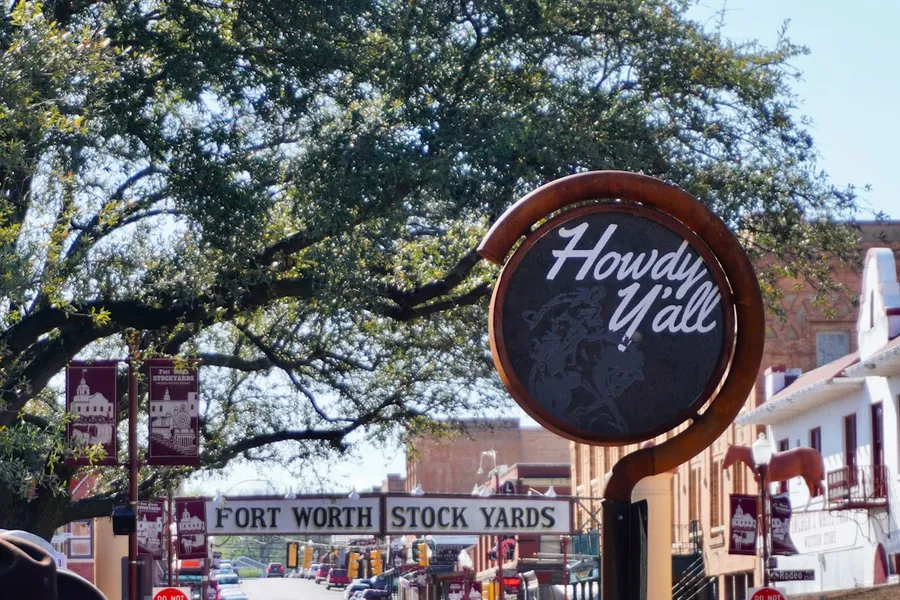
We cover the busy corridors — Sundance Square and Downtown (76102), the Cultural District and West 7th (76107), Near Southside and Magnolia (76104), TCU and University (76109), Camp Bowie, Clearfork, the Stockyards (76106), and the Alliance, Meacham and Fossil Creek business parks on the north side (76137, 76244).
Outside the city limits we cover the same work in Keller, Arlington, Mansfield, Burleson, and North Richland Hills. Not sure if you’re in range? Call and ask — the answer is usually yes.
Preventive Maintenance Contracts for Fort Worth Businesses
The best way to avoid an emergency shutdown is to never reach one. We set up scheduled maintenance contracts for Fort Worth businesses — restaurants, retail, offices, salons, and small industrial sites — built around your equipment and your hours. A typical agreement covers regular multi-point inspections of every unit, coil cleaning, filter and belt changes, refrigerant and electrical checks, and priority scheduling that puts you at the front of the line if something does go wrong.
For most businesses the contract costs less than a single emergency repair with a day of lost trade, and it makes your HVAC a predictable line item instead of a nasty surprise. It works hand in hand with our residential maintenance plans — same discipline, scaled to commercial equipment. Ask us for a walk-through and a flat annual quote.
Permits, Codes, and Compliance in Fort Worth
Commercial work carries obligations residential jobs don’t, and getting this wrong is expensive. Most commercial replacements and new installations in Fort Worth require a mechanical permit and inspection, and the work has to meet the adopted mechanical code and the city’s amendments — including minimum outside-air ventilation for occupied spaces, fire and smoke damper requirements where ductwork crosses rated assemblies, and proper condensate disposal.
Two things catch owners out. First, a like-for-like swap doesn’t automatically keep you grandfathered — depending on the scope, a replacement can trigger current-code requirements the old system predated. Second, unpermitted work tends to surface at the worst possible moment: during a property sale, a lease negotiation, an insurance claim, or a fire-marshal inspection.
We handle permitting as part of the project, coordinate the inspection, and hand you the documentation at the end. And if a job genuinely doesn’t need a permit, we’ll tell you that too — what you won’t do is find out afterwards that one was skipped.
A Recent Commercial Call
A Fort Worth restaurant lost cooling on a rooftop unit on a Saturday afternoon with a full dining room. The previous company had “recharged” it twice that summer without ever finding why it kept losing refrigerant. We traced the leak to a corroded coil connection, made the repair, recharged the system, and had the dining room cooling again the same evening — with a written quote before we touched it. One real fix instead of a third top-off. (Representative example of this type of job.)
Trained Techs, Written Quotes, No Runaround
Every repair is explained in plain language, quoted in writing before we start, and backed by a workmanship warranty. The technicians we work with are trained on both packaged rooftop units and split commercial systems, so you’re never paying anyone to learn on your equipment. And if the honest answer is “this unit’s cheaper to replace than to keep patching,” we’ll tell you that — with the numbers to back it.
Keep the Doors Open
If your system’s down now, don’t wait for it to cost you a day of business. Related help: 24/7 emergency AC repair, preventive maintenance plans, and system replacement and installation. For a specific location, start with HVAC service in Fort Worth.
How Service Works
Three easy steps — no runaround, no surprise pricing.
Call or Fill Out the Form
Tell us your system type, what it’s doing (or not doing), and your area or ZIP code.
Get an Upfront Quote First
We diagnose the real problem and give you a flat, written price before any work starts — so you decide, not us.
We Fix It — Often Same Day
A background-checked technician arrives, gets it running, and cleans up. Most repairs are done in one visit.
Commercial HVAC FAQs
Can you work outside business hours?
Do you service rooftop units?
Do you offer maintenance contracts?
How fast can you respond to a business?
What types of businesses do you work with?
Explore Our Services


Areas We Serve



Ready to Get Comfortable Again?
Skip the form — the fastest way to get help is a phone call. Tell us what your system is doing and we’ll give you a straight answer and an upfront price.
(817) 710-3410Need Commercial HVAC in Fort Worth?
Real techs, real answers, upfront pricing — 24 hours a day.
📞 Call (817) 710-3410