You open the August bill and it is nearly double what you paid in April. Nothing changed. Same house, same family, same habits. The instinct is to blame the electricity provider, and every summer thousands of Fort Worth homeowners spend an afternoon comparing plans looking for the culprit.
It is almost never the plan. In a North Texas summer, cooling accounts for somewhere between half and two-thirds of a typical home’s electricity use. When the bill jumps, the honest answer is usually that your air conditioner is working harder than it needs to — and the reasons are specific, findable, and mostly fixable.
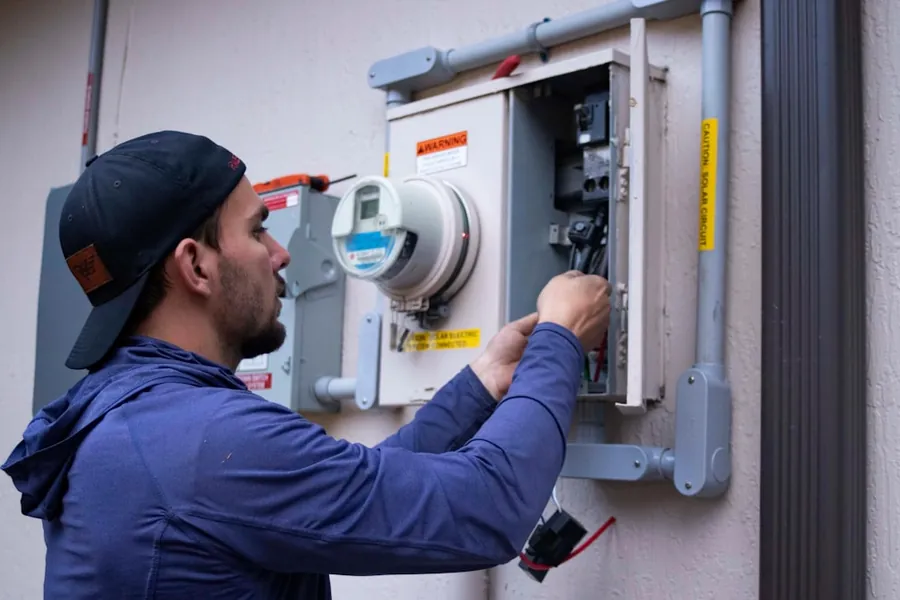
Why Is My Electric Bill So High in Summer in Fort Worth?
Cooling drives roughly half to two-thirds of a Fort Worth home’s summer electricity use. When bills spike, the usual causes are a dirty filter or coil, leaking ductwork, low refrigerant, or an ageing system losing efficiency. Most are fixable, and a seasonal tune-up typically finds them in one visit.
First, the Fort Worth Math
Before assuming something is broken, it helps to understand how brutal the arithmetic is here. Your air conditioner does not cool your house to a fixed temperature — it removes the difference between outside and inside.
On a 78-degree May afternoon with your thermostat at 74, the system fights a four-degree gap. On a 104-degree July afternoon with the same setting, it fights thirty. That is not seven times the work, but it is dramatically more — and the system runs for hours instead of cycling briefly. Add attic temperatures that hit 130 degrees and ductwork sitting in that heat, and a doubled summer bill starts to look less like a mystery.
Some increase is unavoidable and normal. What is not normal is a bill that jumps sharply compared with the same month last year, in the same house. That comparison — not April versus August — is the one that tells you something has changed.
Pull up last August’s bill and compare it with this August. If usage is up 20–30% for a comparable summer, something in the system has degraded. If it looks similar, you are paying for the weather, not a fault.
Eight Reasons Your AC Is Costing More Than It Should
1. A dirty air filter
The least glamorous item on the list and the one that costs Fort Worth homeowners the most money collectively. A clogged filter restricts airflow, which makes the blower work harder and the system run longer to reach the same temperature.
During heavy summer running, most homes need a filter change every month or two — not the “every 90 days” printed on the box, which assumes moderate use in a mild climate. If you cannot remember your last change, that is your first stop, and it costs about the price of a coffee.
2. Leaking or poorly insulated ductwork
This is the big, invisible one. In a typical home, leaking ducts waste 20 to 30% of the air you are paying to cool. In North Texas that air escapes into an attic sitting well above 120 degrees, meaning you pay to cool a space you never occupy.
You can have a perfectly serviced, high-efficiency system and still lose a third of its output before it reaches a room. Sealing accessible duct runs often saves more than upgrading to a higher-efficiency unit, and costs a fraction as much.
3. A dirty condenser coil
The outdoor unit rejects heat through its coil. When that coil is packed with cottonwood, grass clippings, and the fine dust that settles over a Texas summer, it cannot shed heat efficiently, so the compressor runs longer and hotter for the same cooling.
You can rinse the outside of the coil gently with a hose — power off at the breaker first, spray from the inside out where you can, and never use a pressure washer, which bends the fins and makes things worse.
4. Low refrigerant
An undercharged system cools weakly and runs almost continuously trying to catch up. Bills rise, and so does wear on the compressor. Refrigerant does not get consumed, so if the charge is low there is a leak that needs finding — not just topping off.
5. An ageing system
Efficiency declines with age even on well-maintained equipment. A 15-year-old system running at 10 SEER against a modern 16 SEER unit is doing the same job for meaningfully more electricity, every hour, all summer. If your system is past twelve years and the bills keep climbing, some of that increase is simply age.
6. Thermostat habits
Two myths cost real money. The first: setting the thermostat to 65 does not cool the house faster — an AC has one speed, so all you do is overshoot and run longer. The second: switching the system off entirely while you are at work often backfires in Texas, because pulling a 90-degree house back to 74 costs more than holding a moderate setting.
A modest setback of three or four degrees while you are out is the sweet spot here, not a dramatic one.
7. Attic insulation and sun exposure
Plenty of older Fort Worth homes — the 1950s through 1980s stock in places like North Richland Hills and the established Fairmount streets — were insulated to standards that made sense then and do not now. Heat pours through the ceiling all afternoon and your AC spends the evening removing it.
West-facing rooms with untreated windows compound it. Closing blinds on the sun side during peak afternoon is free and genuinely measurable.
8. A failing component you have not noticed
A weak capacitor, a struggling fan motor, or a system short-cycling on a fault will all draw more power while cooling less. These often show up as a bill increase before they show up as a breakdown — which is exactly why a sudden jump is worth investigating rather than absorbing.
Bill up sharply with no obvious cause? A seasonal tune-up finds the airflow, refrigerant, and electrical faults that quietly inflate summer running costs.
📞 Call Now — (817) 710-3410What Actually Saves Money, Ranked
Not every fix is worth the same. Here is roughly how they stack up for a typical Fort Worth home, cheapest and fastest first.
| Action | Effort | Impact on summer bills |
|---|---|---|
| Change the filter monthly in summer | Minutes, few dollars | Small but immediate |
| Rinse the outdoor coil | 30 minutes, free | Noticeable if it was dirty |
| Close blinds on sun-facing rooms | Free | Small, adds up daily |
| Modest thermostat setback (3–4°) | Free | Moderate |
| Seasonal professional tune-up | One appointment | Moderate to high |
| Seal accessible duct leaks | Half-day job | High — often the biggest single win |
| Add attic insulation | Larger project | High on older homes |
| Replace an ageing low-SEER system | Major investment | Highest, longest payback |
Most homeowners jump straight to the bottom of that table and start pricing new systems. Work from the top instead. Duct sealing and a proper tune-up frequently deliver a large share of the available savings for a small fraction of a replacement cost.
Have the ducts checked first. Installing efficient equipment onto leaky ductwork means paying premium prices for air that still escapes into a 130-degree attic.
When a High Bill Means the System Is Failing
Rising bills alone are not an emergency. Rising bills alongside any of these are worth a call:
- The system runs almost continuously and still cannot hold your set temperature.
- Some rooms are noticeably warmer than others, and it is getting worse.
- The unit turns on and off repeatedly in short bursts.
- Airflow at the vents feels weaker than last year.
- The air is cool but the house never feels dry — a humidity symptom that often points to an oversized or struggling system.
Any of those suggest a diagnosable fault rather than ordinary summer cost. Our HVAC maintenance page covers what a proper tune-up actually checks, and if the system is genuinely struggling, the AC repair page explains the common faults. If your system is past twelve years, the lifespan guide is a useful read before you spend on another repair.
What a Realistic Result Looks Like
Be sceptical of anyone promising to halve your bill. In a Fort Worth summer, a well-maintained system in a reasonably sealed home will still cost real money to run — the weather sets a floor nobody can talk their way under.
What is realistic is closing the gap between what you are paying and what you should be paying. A filter, a clean coil, sealed ducts, and a correctly charged system return your equipment to the efficiency it was designed for. That is the honest goal, and for most homes it is worth pursuing before any conversation about replacing the system begins.
How a Fort Worth Summer Actually Bills Out
It helps to see the shape of the year rather than reacting to one alarming envelope. In most Tarrant County homes the pattern runs like this.
April and May are the cheap months — the system cycles on and off, running a few hours a day. June is where the climb starts and where most people first notice. July and August are the peak: the AC may run most of the daylight hours and well into the evening, because the house never fully sheds the heat it absorbed all afternoon. September stays expensive longer than people expect, since North Texas routinely delivers 95-degree days into early October.
So a June bill that surprises you is often just the season arriving. A July bill that is far above last July, in the same house, is a different signal — that is degradation, not weather.
The Humidity Factor Nobody Mentions
Your air conditioner does two jobs at once: it lowers temperature and it removes moisture. In North Texas, especially after a wet spring, the moisture half of that job consumes a real share of the energy you are paying for.
This is why a house can read 74 degrees on the thermostat and still feel clammy and uncomfortable, prompting people to drop the setting further and push the bill higher. The underlying issue is often dehumidification, not temperature.
An oversized system makes this worse, which surprises most homeowners. A unit that is too large cools the air quickly, satisfies the thermostat, and shuts off before it has run long enough to pull meaningful moisture out. You get short, powerful bursts, a damp-feeling house, and more wear on the compressor from constant starting. It is one of the strongest arguments for a proper load calculation whenever a system is replaced — bigger is genuinely not better here.
Frequently Asked Questions
What temperature should I set my thermostat to in Texas summer?
Most homes balance comfort and cost between 75 and 78 degrees while home. Setting it far lower does not cool faster — the system runs at one speed, so you simply run it longer.
Should I turn my AC off when I leave the house?
Not fully, in Texas heat. Pulling a 90-degree house back down costs more than holding a moderate setting. A three to four degree setback while you are out works better.
How often should I change my filter in summer?
Every month or two during heavy summer running, not the 90 days printed on the packaging. Heavy use, pets, and construction dust all shorten that interval further.
Will a new thermostat lower my bill?
A programmable thermostat helps by preventing you from cooling an empty house, but it cannot fix leaking ducts, a dirty coil, or low refrigerant. Address those first.
Is it worth replacing a 15-year-old AC just to save on bills?
Sometimes, but run the numbers first. Compare the annual saving against installation cost, and rule out duct leaks and maintenance issues before assuming the equipment is the problem.
Want to know where your money is actually going? Call (817) 710-3410 and get the airflow, charge, and ductwork checked properly.
Need this fixed today? Call for a straight answer and an upfront price — 24/7.
📞 Call (817) 710-3410admin
Writing about HVAC service, repairs, and costs for Fort Worth, TX homeowners.
Need HVAC Help in Fort Worth?
Tell us what your system is doing and we’ll connect you with a local professional — same-day where possible, with the price agreed in writing before any work starts.
- Same-day appointments available
- Upfront, written pricing
- 24/7 emergency line
Get Your Free Quote
We’ll get back to you as soon as possible. No spam, ever.
Ready to Get Comfortable Again?
Skip the form — the fastest way to get help is a phone call. Tell us what your system is doing and we’ll give you a straight answer and an upfront price.
(817) 710-3410